Transite Roof Recovery: Technical Context for Environmental & Engineering Consultants
Legacy Transite (asbestos cement) roof systems remain in service across thousands of industrial and Federal facilities. In many cases, these systems have been concealed for decades by coatings, overlays, or partial repairs - masking both material condition and risk.
Consultants are often asked to evaluate or advise on these roofs with incomplete visibility, limited historical documentation, and competing pressures around safety, operations, and liability. This page exists to provide technical context behind why Transite roof decisions are uniquely high-risk, why many conventional approaches fail in practice, and why consultants increasingly seek specialized input before issuing recommendations.
Why Transite Roof Systems Create Disproportionate Risk
Transite roof systems introduce elevated risk due to the combined effects of material aging, undocumented modifications, and limited visibility into the original substrate condition.
- Many Transite roofs remain in service not by design, but by accumulated concealment - coatings, foams, and overlays applied over decades.
- Visual inspection alone rarely reflects the true condition of aged asbestos cement panels.
- Consultants are frequently brought in after prior interventions have already altered the risk profile.
These factors complicate accurate condition assessment and can materially influence both disturbance risk and regulatory classification during evaluation or intervention.
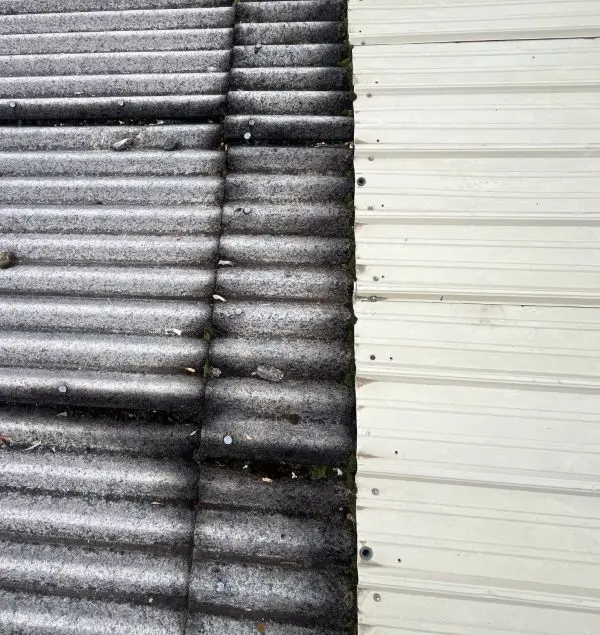
Why Conventional Roofing Logic Breaks Down with Transite (asbestos roof systems)
Conventional roofing methodologies are typically developed around steel, concrete, or modern membrane substrates and do not account for the material behavior of Transite asbestos-cement systems.
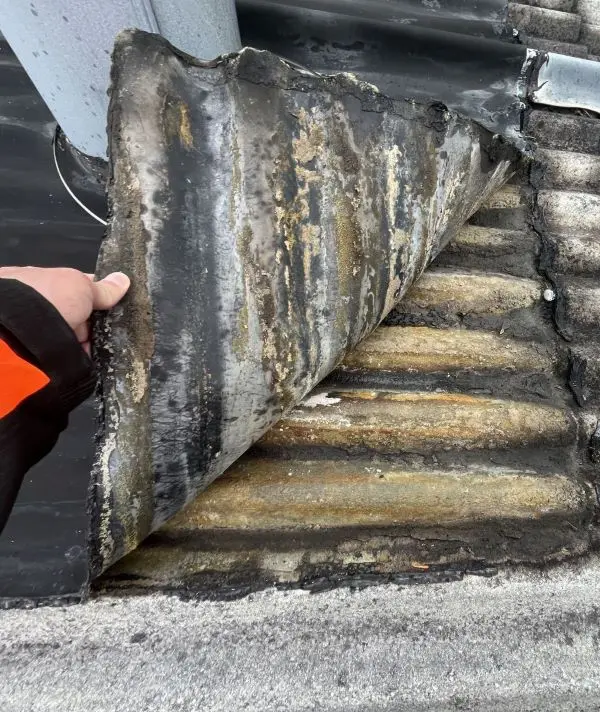
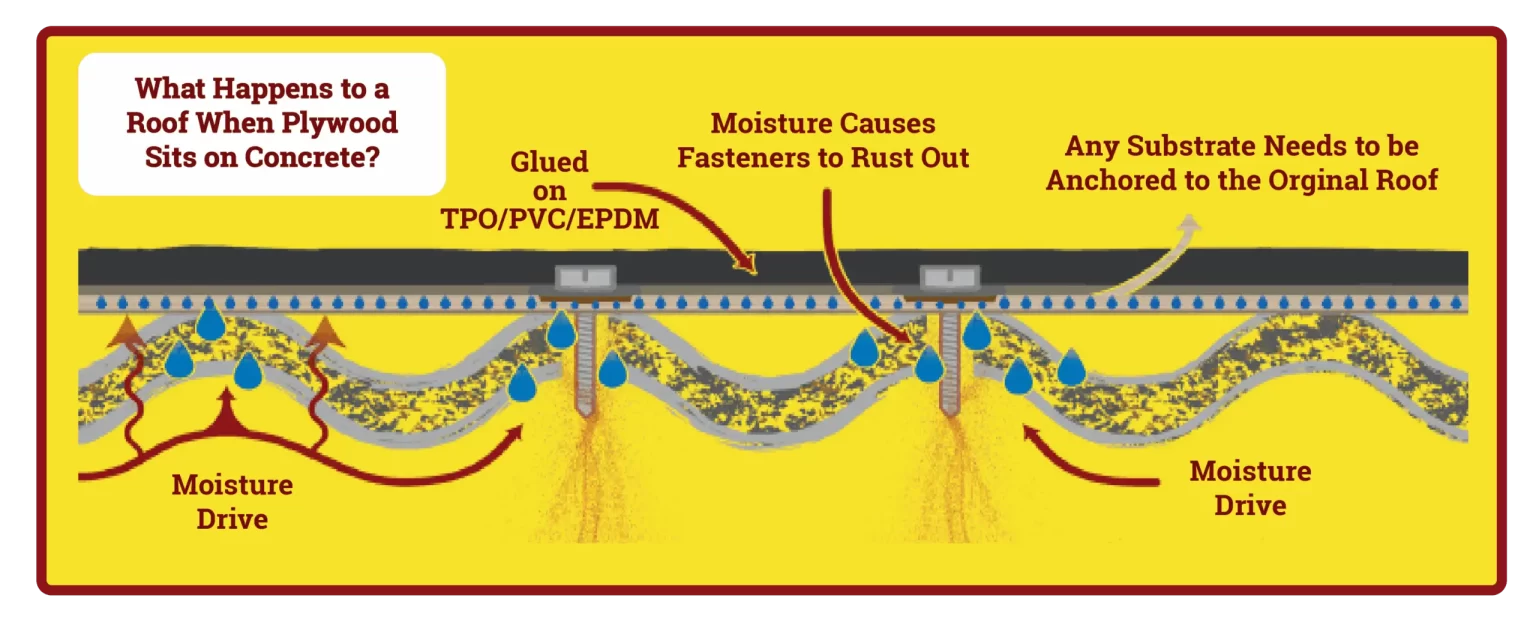
- Adhesion failures driven by moisture migration
- Fiber release risks created by new penetrations
- Secondary waste streams created by incompatible overlays
- Consultants are frequently brought in after prior interventions have already altered the risk profile.
Transite exhibits a porous cement matrix, active vapor transmission, and heightened sensitivity to penetration or surface disturbance - conditions that frequently lead to mechanical failure or regulatory complications when standard systems are applied.
How We Support Consultant Decision-Making
Thermal-Tec supports engineering consultants by providing technical input on whether Transite roof recovery is appropriate based on material condition, operational constraints, and disturbance risk.
We review conceptual approaches for constructability in active industrial environments, with specific attention to unintended asbestos disturbance and system compatibility. When requested, we assist in developing technically defensible, risk-managed recommendations suitable for engineering documentation and client review.
If you are evaluating a Transite or asbestos-cement roof system and need technical clarity before advancing a recommendation, Thermal-Tec is available as a confidential technical resource.
Early consultation often reduces downstream risk - for consultants, owners, and workers alike.