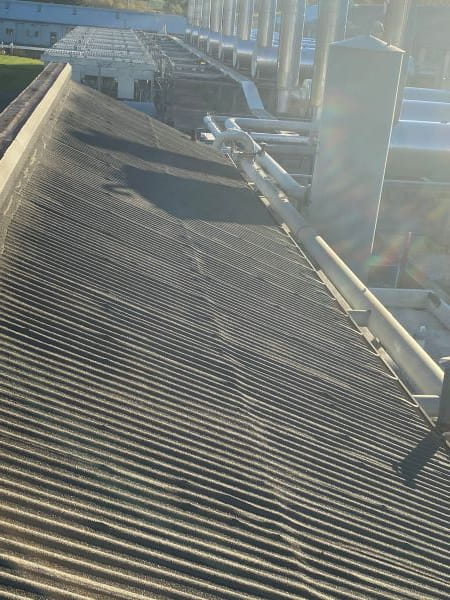
Engineered Roof Restoration Systems for LNG Pipeline Infrastructure
Protecting compressor stations, terminals, and critical assets from chemical exposure, thermal stress, and accelerated weathering - without disrupting operations.
In LNG and natural gas transmission environments - across upstream, midstream, and downstream operations - roof systems are exposed to more than weather. Hydrocarbon vapor, chemical residue, thermal cycling, and mechanical vibration all accelerate deterioration. Thermal-Tec delivers engineered roof restoration systems designed for pipeline infrastructure, extending roof life while maintaining compliance, safety, and uptime.
Prequalified for High-Hazard Energy Environments
Pipeline operators demand more than roofing; they require contractors who meet the strictest safety, compliance, and workforce qualification standards. Thermal-Tec is an approved contractor across leading platforms, including Veriforce, Avetta, Browz, and ISNetworld.
With an EMR of 0.65, over 1 Million work hours with no recordable OSHA incident, and $10M in coverage, our crews are aligned with the expectations of operators like Williams Companies and Kinder Morgan.
Why it matters:
When working in LNG and gas transmission facilities, contractor compliance isn’t optional - it’s operationally critical. We meet your internal safety benchmarks before stepping on site.
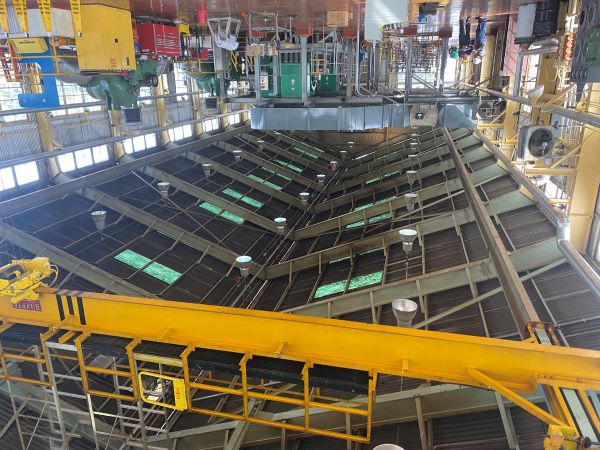
Why LNG Facilities Experience Accelerated Roof Degradation
While LNG pipeline infrastructure is highly specialized, roof failures follow predictable patterns driven by your operational environment. Compressor stations and processing facilities expose roofing systems to hydrocarbon vapors, chemical by-products, and particulate contamination that settle and degrade roof surfaces over time.
Thermal cycling from pressurized systems, combined with vibration and structural movement (“building racking”), further stresses seams, fasteners, and panels - especially on metal and legacy systems. These conditions accelerate weathering far beyond standard commercial environments, leading to leaks, panel instability, and reduced service life.
Many facilities still rely on transite roofing systems, originally selected for their durability, fire resistance, and corrosion resistance. While these systems have performed well historically, they now present challenges related to aging, permeability, and potential asbestos exposure during replacement.
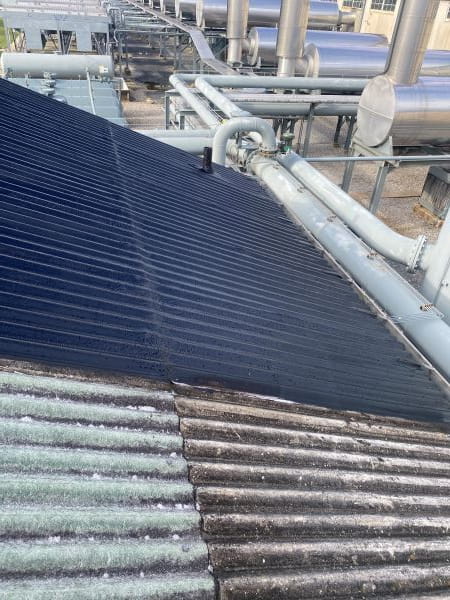
Restore Performance Without Tear-Off or Downtime
Traditional tear-off and replacement methods introduce unnecessary risk in LNG environments - potentially impacting operations, safety, and regulatory compliance. Thermal-Tec’s MR Multi-Ply® Vulcan Roof System is engineered to restore existing metal, transite, fiberglass, and BUR systems without removal.
Unlike coatings, which allow vapor transmission and eventual bond failure due to high permeability, our multi-layer system creates a fully adhered, reinforced barrier. With up to 100,000 pounds of additional tensile strength and Class A fire rating, it is designed to withstand the environmental demands of pipeline infrastructure.
Operational advantages include:
-
No production interruption during installation
-
Zero leaks after Phase 1 completion
-
Phased project execution aligned with facility operations
-
Long-term protection against vapor drive and moisture intrusion